Penn Live Arts Blog / March 2026

Summer Internships in Philadelphia

Posted March 19, 2026

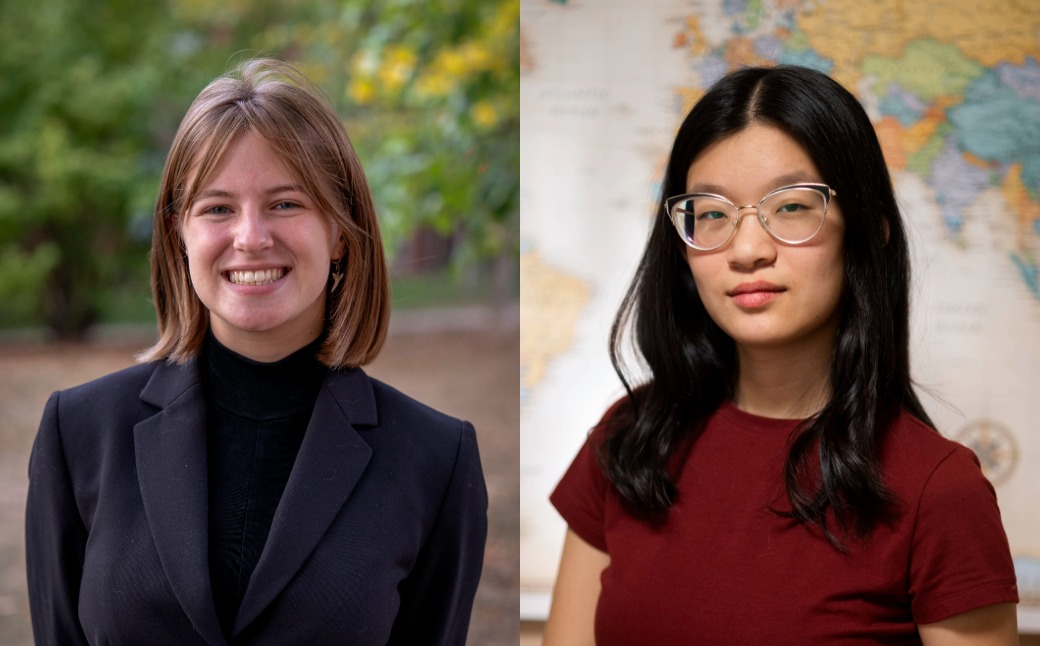
Our Arts & Entertainment Career Connections program and CURF’s Summer Humanities Internship Program are two campus resources that provide paid summer internship opportunities in the arts, culture and entertainment fields to Penn students. Many internships are in Los Angeles, New York or other entertainment meccas, but some students chose to stay local in Philadelphia. I talked over Zoom with four students who received support from these programs to learn more about their experiences.

Tell us in a few words about your internship from last summer.

Sylvia Erdely: I was the festival coordination intern at Fringe Arts, so I worked across several departments to put together the Fringe Festival.

Noel Palomino: I was a digital media intern at the Arthur Ross Gallery here at Penn. My days were mostly focused on researching for upcoming exhibitions [including] the current one on art in the 1980s. I also did some cataloging of previous materials from the gallery and some social media.

Elliot Ross-Dick: I worked at 1812 Productions, an all-comedy theatre company in Philadelphia. I was mostly helping around the office. I would help with workshops they had coming up, organizing and scheduling people for auditions. I was just going to work every day and being like, what do you have for me to do today?

Sierra Williams: I worked in the Penn Cultural Heritage Center, which is a research center at the Penn Museum. I was working on the Missions and Acquisitions project, logging 500 different museums, and their different provenance policies and how many artworks they return to which countries.

Did you intend to stick around Philadelphia?

Erdely: I'm from Philly, [so] I applied to internships in arts establishments around Philly and New York. And this one landed, and I was very excited about it.

Palomino: I'm from Mexico, and I was applying to places in the U.S. and ended up in Philly.

Ross-Dick: I'm from Trinidad, so I knew that I wanted to stay in the U.S. I just applied to jobs in Philly and New York, and then the one that I got was in Philly.

Williams: I'm from New York, so I knew I wanted to stay in the tri-state area. But because my main career goal is working in museum curation, I did apply to the Penn Museum. I really do love Philly because it is very similar to New York; it’s walkable and urban, and there's public transportation. So, I took that into account.

What skills do you feel like you gained?

Erdely: I got a good look at what goes into a large-scale arts event. Skills-wise, I felt like my problem-solving and critical thinking were enhanced. My supervisor had a hands-off approach. He wanted to see how I would move forward with assignments, and he cared about my perspective. It gave me a level of workplace confidence, not only in the fact that I can figure out my assignments, but also that I can ask questions when I need guidance. That has stuck with me.

Palomino: I learned a lot about how the art world functions. During the summer, we were receiving the work for Hung Liu. I got to see the paperwork that went behind borrowing pieces. What processes you go through, considering the perspective of Hung Liu’s estate and Georgetown University [where the exhibit originated]. It's not just, “Okay, I want to bring these pieces.”

Ross-Dick: I think I was similar to Sylvia [Erdely]. I got to see a lot of solo artists' work. 1812 has a workshop where female solo artists can do a week-long residency in their office. It was inspiring, and I went on to do a solo show this semester. If you go to 1812 and wait for somebody to tell you to do something, then you're not gonna do anything. You have to go around and ask is there anything you need help with today? That's a great skill to have.

Williams: The skills I got from my internship are kind of abstract: a lot of terminology and an inside look into working in a museum. It inspired me to pursue a career at a UNESCO cultural heritage site or other museums and cultural institutions. I learned a lot about the culture of working in a museum and how to go about it ethically.

How did you experience Philadelphia differently than you do as a student? And Sylvia, since Philadelphia is your hometown, did working at Fringe Arts give you a new angle on the city?

Erdely: I do feel like working at Fringe gave me a different perspective on a city that I already know very well. Every day at Fringe, I was surprised by something that was going on in the city, by some artist who was doing something new. And it took me to a lot of different venues. I don't feel as inclined to explore Philly because I feel like I've already done it. But this internship did remind me there's so much more out there.

Ross-Dick: For me, this internship kind of blew Philadelphia wide open. I had to go into South Philly every day, which I'd never been to before. The culture of South Philly is so different. I love eating the food there. Sometimes my boss would give me a ride, and I would ask about where we were driving through. I think just being forced to go far away from campus requires you to learn the city so much more. And then I just saw way more theatre in Philly than I've ever seen before.

Palomino: My internship was on campus, but having extra time for myself, I did have time to explore the city more than during the semester. And since my supervisors knew about the art world in Philadelphia, I got to learn more about what was going on.

Williams: Yeah, I would say I got to see a different side of Philly, especially when it comes to museums. We had weekly field trips to different institutions in Philadelphia: the PMA (Philadelphia Museum of Art), the Fabric Workshop and Museum, the Barnes. We got to talk to the staff, and I was able to see what it's like to live here long-term. It's a lot to think about: what do I want to do in the future? But I think I got a lot of insight from the museum professionals. And I would also agree that I had more free time to explore the city.

How did these internships give you more clarity into what you want to do in the future – not just what kind of job you want to have, but what type of team and community you want to be part of?

Erdely: Working at Fringe showed me that I am interested in arts administrative roles, where I get to work on internal projects but also with patrons. I learned that I really thrive in open workspaces where there are clear-cut departments, but people are free to flow between. Everyone on my team was so smart and creative and witty; I know wherever I go professionally, if I'm with a team that's open and creative and thoughtful, I will be able to succeed.

Palomino: I enjoy urban life. I grew up in the city, and I applied to Penn because it's in the city. I stayed over in the summer because it's urban. I like how these urban spaces bring culture from all over. From my work, I learned that I want to do something in the art scene, maybe [be] a curator. The Arthur Ross Gallery is a small team, and a lot of stuff gets done, so I think that kind of productivity – even though it’s just 3 or 4 people – is amazing.

Ross-Dick: I think one of the biggest takeaways is I learned how alive and real and connected the theatre community here is in Philly. 1812 is a very family-oriented company, so being able to have that community was great. That's the kind of space I want to be in. I would [love to] work in the theatre community in Philly. I think it's a great place to explore your interests and the arts.

Williams: Staying over the summer showed me that I want to be in an area that has a lot of museums and culture. And that I want to surround myself with people in the humanities, people that love culture and different languages, are curious about the world and want to make a difference. My internship made me more serious about pursuing cultural heritage and working with Indigenous communities and marginalized people to get their work out there and to represent them accurately. Me and Noel [Palomino], we're working on a museum exhibit right now, working with Indigenous art, and my summer internship inspired me to apply to this project. To build community with the people I'm trying to represent is something that's important to me.

Leah Falk is the Director of Education & Engagement at Penn Live Arts.